
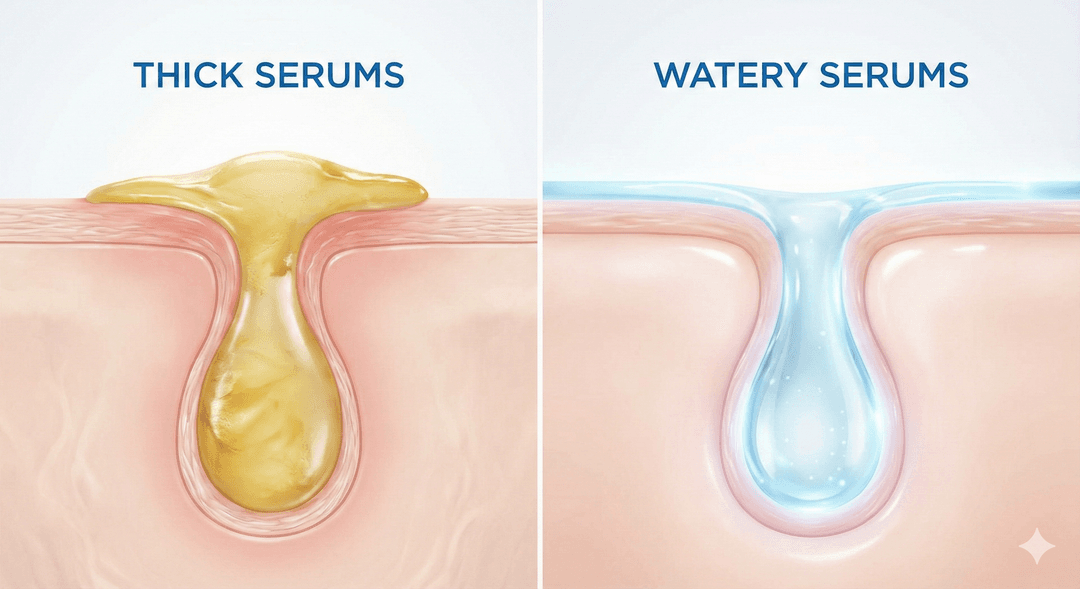
If you have acne-prone or oily skin, you have probably been trained to fear moisture. You might think "glowy" equals "greasy."
But here is the irony: Dehydrated skin produces more oil.
When your skin lacks water, it panics and overcompensates by producing excess sebum to protect itself. This leads to the "Oily but Dry" cycle—you are shiny by noon, but your skin feels tight and flaky underneath.
Hyaluronic Acid (HA) is the perfect solution because it adds water without adding oil. However, not all HA serums are safe. Some are thick, gloopy, or formulated with ingredients that trigger fungal acne.
Here is how to find the ones that won’t break you out.
Acne-prone skin hates heavy films. You want an HA serum that feels like water, not syrup. The key here is to avoid High-molecular-weight serums that sit on top of the skin (like The Ordinary’s original formula), as they can trap bacteria if not sealed properly.
Our suggestion is to look for "Low Molecular Weight" or "Hydrolyzed" Hyaluronic Acid. These penetrate instantly and leave zero residue.
Hyaluronic Acid itself is non-comedogenic (it won't clog pores). But the other ingredients might. Many serums contain oils, esters, or fatty acids to make them feel "luxurious." If you suffer from Fungal Acne (Malassezia folliculitis), these ingredients literally feed the yeast on your face.
The safe bet is to Look for minimal ingredient lists. Good Molecules and Isntree are frequently cited on Reddit as "Fungal Acne Safe."
The best HA serums for acne do double duty. They hydrate and calm inflammation. Look for serums that pair HA with:
We analyzed the threads to see which bottles acne-prone users actually finish.
Ready to fix your dehydration without causing a breakout? We have deep-dived into the ingredient lists and user reviews for the safest options on the market. Click below to see the full analysis:
Apply a small amount of the serum to a place where you usually break out (e.g., the jawline or chin), but only on one side of your face.
Wait a full day. Look for immediate redness, itching, or tiny whiteheads.
Acne isn't always instant. Continue applying it to that small spot for 3 days. If no new bumps appear by day 4, it is likely safe to use on your whole face.