
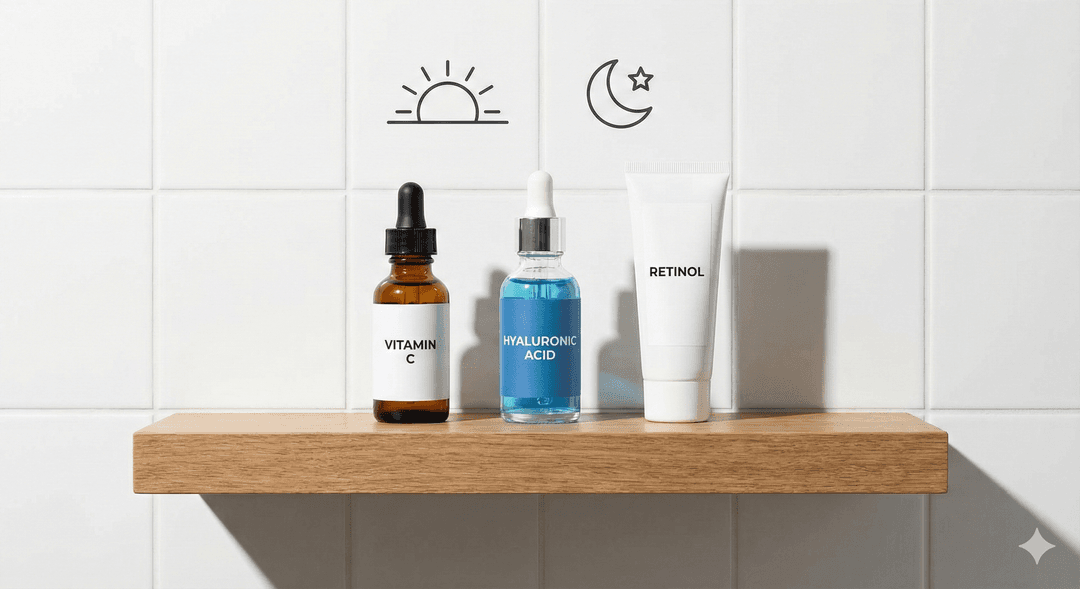
Skincare veterans knows the fear: you buy three expensive serums, layer them all at once, and wake up with a red, stinging face.
Chemical burns are not a rite of passage. They are usually the result of mixing the wrong pH levels or applying products in the wrong order.
Hyaluronic Acid (HA) is unique because it is one of the few ingredients that plays well with almost everyone. It is not an "active" exfoliant; it is a hydrator. This makes it the perfect buffer to use alongside potent ingredients like Vitamin C and Retinol.
However, simply slapping them on at the same time can reduce their effectiveness. To get the most out of your money, you need to respect the chemistry.
The golden rule of morning skincare is protection. Vitamin C protects you from free radicals, and Hyaluronic Acid protects your moisture barrier.
The conflict here is pH levels. L-Ascorbic Acid (the most potent form of Vitamin C) requires a low pH (acidic) to penetrate the skin. Hyaluronic Acid is generally pH neutral.
If you apply HA first, you might create a buffer that prevents the Vitamin C from fully absorbing.
This order ensures the active ingredient hits your skin first, while the HA locks in hydration on top.
Retinol (and Tretinoin) is the gold standard for anti-aging, but it is notorious for causing dryness and irritation ("The Uglies").
Hyaluronic Acid is your safety net. You can use it in two ways depending on your skin's tolerance.
Option A: For Tough Skin (Maximum Efficacy) Apply Hyaluronic Acid first on damp skin. Let it dry completely. Then apply your Retinol. Because wet skin absorbs products faster, applying Retinol over damp HA might increase penetration—and irritation. Only do this if your skin is used to retinoids.
Option B: For Sensitive Skin (The Sandwich Method) This is the Reddit-preferred method for avoiding irritation.
Now that you know the order, you need the right tools. We have analyzed the best serums for both categories.
For the morning, you want a Vitamin C that won't oxidize quickly. For the buffer step, you need a simple HA serum that won't pill under your retinol.
Check out our consensus rankings below to find the specific bottles that work best together.
After cleansing, apply your Hyaluronic Acid serum to damp skin. Allow it to dry down completely (about 2-3 minutes) so your skin is dry to the touch.
Apply a pea-sized amount of Retinol or Tretinoin. Dot it on your forehead, cheeks, and chin, then spread evenly.
Wait another minute, then apply a thick, occlusive moisturizer to lock everything in.