
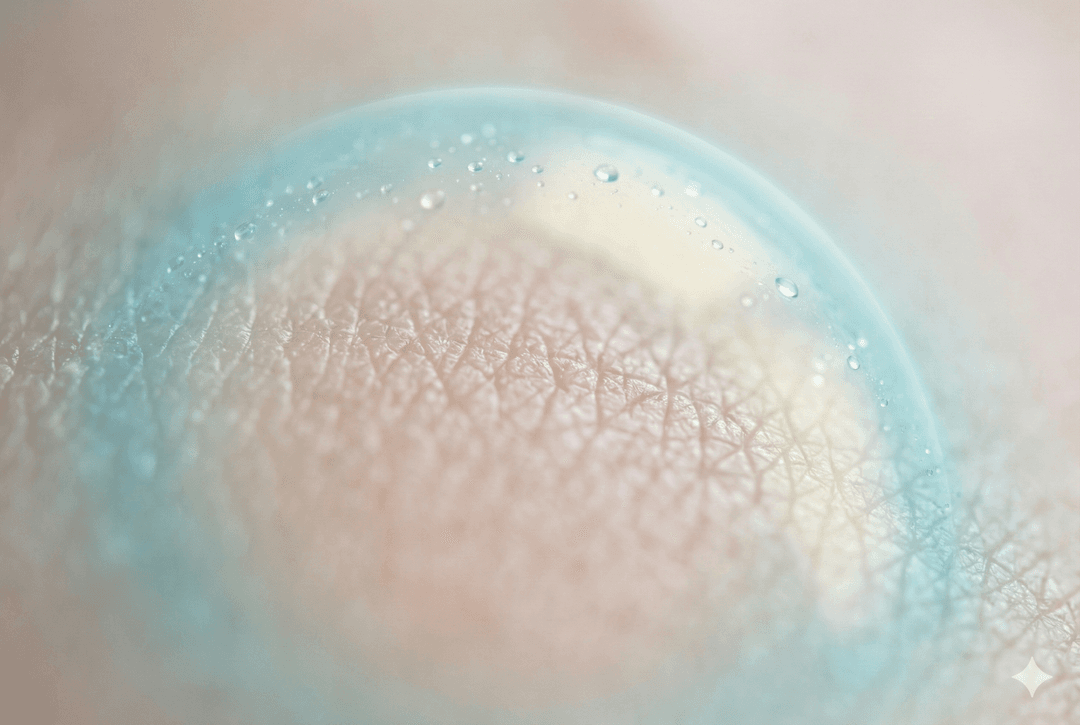
For decades, the "squeaky clean" feeling was the gold standard of washing your face. We scrubbed until our skin felt tight, believing we were washing away the grime. In reality, we were stripping away our biological armor.
This is the core of the Barrier-First Paradigm: the understanding that healing sensitive skin, acne, and eczema doesn't start with a potent serum—it starts at the sink.
The secret lies in an invisible, microscopic layer on your skin’s surface called the acid mantle. When you protect this layer, your skin can heal itself. When you destroy it, you open the floodgates to irritation.
Healthy human skin is not neutral. It is distinctly acidic, sitting in a "sweet spot" pH range of 4.5 to 5.5.
This acidity isn't an accident; it's a hydrolipid film made of sebum, sweat, and breakdown products of filaggrin (like urocanic acid). Maintaining this specific pH is critical for three biological functions:
Here is where traditional cleansing goes wrong. Old-school soaps—made by mixing fats with lye—typically have a pH of 9.0 to 10.0.
When you wash with these alkaline soaps, you cause a "pH spike," raising your skin’s surface pH by 1.5 to 2.0 units.
Studies have shown that acne patients using pH-balanced cleansers (pH 5.5) saw a reduction in inflammatory lesions, while those using alkaline soap saw their condition get worse.
A common myth is that rinse-off products don't matter because they just go down the drain. While true for some ingredients, modern formulations use smart delivery systems to deposit barrier-repairing actives while you cleanse.
If you want to adopt the Barrier-First Paradigm, look for these four powerhouse ingredients in your cleanser.
1. Ceramides: The Structural Lipids
Ceramides make up about 50% of the "mortar" that holds your skin cells together.
How they work in cleansers: New technologies (like cationic polymers) allow ceramides to stick to your skin even after rinsing. This leaves a thin, protective layer behind.
The Golden Ratio: For maximum repair, look for products that combine Ceramides, Cholesterol, and Fatty Acids in a 3:1:1 ratio. This mimics your skin's natural composition.
2. Colloidal Oatmeal: The Clinical Soother
Colloidal oatmeal is an FDA-recognized skin protectant, and for good reason.
Why it works: It contains Avenanthramides (anti-inflammatories similar to hydrocortisone) and Beta-glucans.
The benefit: In a cleanser, the starches create a cushiony film that buffers your skin against friction. Clinical data shows that 1% colloidal oatmeal significantly reduces itch and redness in eczema-prone skin.
3. Centella Asiatica (Cica): The Wound Healer
Also known as Gotu Kola, this botanical is famous for its healing properties.
The Science: Compounds like Madecassoside and Asiaticoside help calm inflammation and stimulate collagen.
Real Results: Studies on sensitive skin have shown that cleansers with Centella and Panthenol can reduce facial redness and stinging over 4 weeks by preventing the neurosensory reaction—that "ouch" feeling—during cleansing.
4. Panthenol (Vitamin B5) and Allantoin
These are the hydration heavyweights.
Panthenol: Penetrates deep to help synthesize lipids and keep the barrier intact.
Allantoin: Soothes the skin and helps smooth out rough texture.
Together: They counteract the drying effect of water, ensuring your skin feels soft, not tight, after washing.
Ready to fix your barrier? Start by checking out the top reddit rated cica face creams and face cleansers on Thorough Beauty
Use lukewarm water. Hot water strips natural oils and exacerbates the "alkaline assault" effect.
Apply your pH-balanced cleanser to damp skin. Massage gently for a full 60 seconds to allow ingredients like Centella and Ceramides to deposit on the skin
Do not rub aggressively. Use enough product so that your fingers glide over your face, creating a "cushion" between your hands and your skin.
Rinse thoroughly and pat your face dry with a clean, soft towel. Never rub, as friction damages the compromised barrier.