
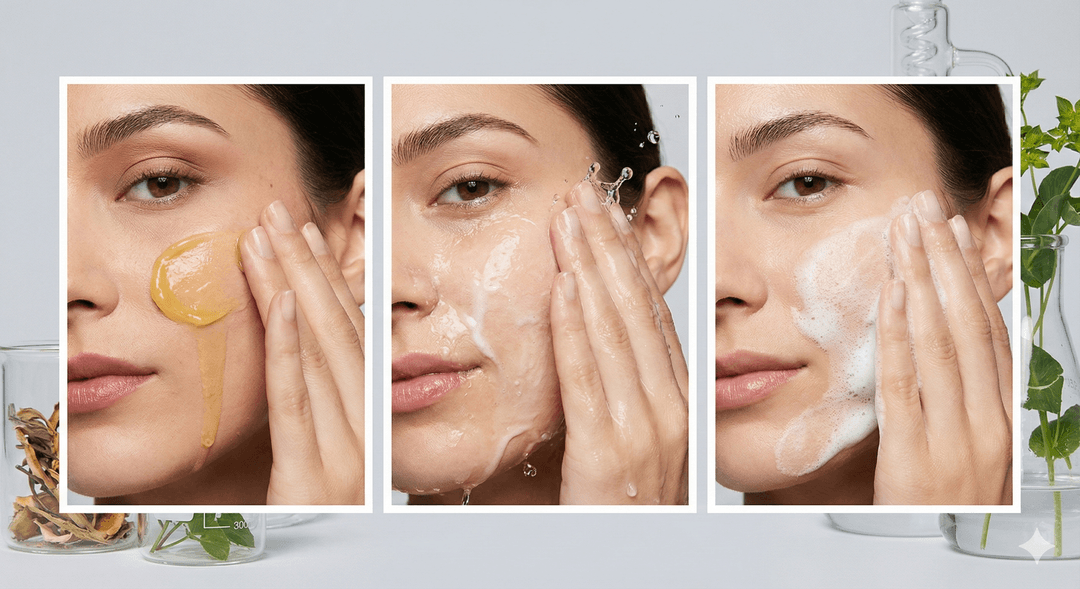
We are moving past simple soap and water. Today's approach to skin hygiene goes beyond just removing dirt; it is about strategically supporting the skin's complex ecosystem. This deep dive explores the chemistry behind viral trends and introduces the new frontier of microbiome-supportive hygiene. This is the science that validates the extra steps in your routine.
Double cleansing is the two-step method of using a lipophilic (oil-based) cleanser followed by a hydrophilic (water-based) cleanser. While it may seem like extra work, this technique is grounded in a fundamental chemical principle of solubility: like dissolves like.
Modern cosmetic formulations, including long-wear foundations, mineral sunscreens using zinc or titanium dioxide, and silicones, are designed to be hydrophobic, meaning they repel water. A standard water-based surfactant system often fails to emulsify these materials efficiently without aggressive, damaging scrubbing.
The first step uses an oil or balm cleanser as a solvent. The oil binds to solidified sebum in pores and the stubborn polymer films of makeup, dissolving them into suspension. When you add water, emulsifiers within the oil allow the mixture to turn milky and rinse away cleanly.
Once this heavy surface barrier is removed, the second, water-based cleanser can access the epidermis directly. Its job is to remove water-soluble debris like sweat, environmental salts, and any remaining residue from the oil cleanse. Clinical validation shows that a double-cleanse protocol achieves a higher reduction in microbial load and particulate matter without necessitating harsh mechanical scrubbing, thereby reducing stress on the skin barrier.
Popularized by estheticians and viral on social media, the "60-Second Rule" advocates massaging your cleanser into the skin for a full minute. This is not just a marketing gimmick; it addresses both mechanical and chemical necessities of effective cleansing.
Studies suggest the average consumer spends less than 15 seconds washing their face. This is insufficient for surfactants to physically surround and lift oil particles from the skin's surface.
Mechanically, taking sixty seconds allows for thorough coverage of neglected areas where congestion accumulates, such as the hairline, jawline, and the creases around the nose. It also promotes lymphatic drainage and microcirculation through massage.
Chemically, time is crucial. For cleansers containing active ingredients like Salicylic Acid or Benzoyl Peroxide, contact time determines efficacy. Even for standard cleansers, extended time allows for the softening of follicular plugs. However, for extremely dry or sensitized skin, sixty seconds of surfactant exposure may induce irritation. In these cases, modify the rule to focus the time on the non-stripping oil cleansing step, or reduce the total time to thirty seconds.
The most significant advancement in modern hygiene is recognizing the skin as a "living" barrier. Your skin is colonized by a diverse ecosystem of microorganisms—bacteria, fungi, and viruses—known as the microbiome. This ecosystem is integral to your defense system, producing antimicrobial peptides and regulating inflammation.
When this community becomes unbalanced, a state known as dysbiosis occurs. Acne, for example, is linked to a proliferation of specific types of Cutibacterium acnes and a loss of overall diversity. Eczema is strongly associated with an overgrowth of Staphylococcus aureus. Traditional antibacterial soaps and high-pH cleansers act as "scorched earth" tactics, killing beneficial commensal bacteria and disrupting the protective acid mantle, creating an environment that favors pathogens.
To support this living barrier, modern cleansers now incorporate "biotic" ingredients.
Prebiotics are non-digestible fibers and sugars that serve as food for beneficial bacteria, selectively stimulating good strains while inhibiting pathogens. Postbiotics are the non-living metabolic byproducts of probiotic fermentation, such as lactic acid or peptides. They are stable in formulations and provide immediate anti-inflammatory benefits, signaling the immune system to calm down.
True probiotics—live bacteria—are exceedingly rare in cleansers because the preservatives necessary to prevent product contamination would also kill the beneficial bacteria. Most products labeled "probiotic" actually contain postbiotic lysates or heat-killed bacteria. The future of cleansing is moving toward microbiome-friendly certifications that prioritize mild, non-ionic surfactants and strictly acidic pH levels to preserve your native ecosystem.
Now that you understand the mechanics of a proper cleanse, it is time to find the right tools for the job. We have analyzed thousands of discussions to find the best face cleansers and moisturizers. Check out our detailed guides below to build a routine that truly respects your skin's ecosystem.
Begin with dry skin and dry hands. Dispense your oil or balm cleanser and massage gently over the entire face, focusing on areas with heavy makeup or sunscreen. Do not rush this step; allow the oil to dissolve stubborn debris.
Wet your hands with lukewarm water and continue massaging. The oil should turn milky white. This emulsification process lifts the oil and suspended dirt from the skin, allowing it to rinse away easily. Rinse thoroughly.
Apply your water-based gel or cream cleanser to damp skin. Gently massage the cleanser in circular motions, ensuring you cover the hairline, jawline, and around the nose. Continue this massage for a full 60 seconds to allow surfactants time to work.
Rinse your face thoroughly with cool to lukewarm water until all surfactant residue is gone. Gently pat your skin dry with a soft, clean towel—do not rub. Immediately follow with your hydration steps.